Should one entrepreneur control the chip supply powering the robot workforce?
Intel’s entry into Terafab means Elon Musk now controls the compute stack—the chips, the factories, the robots, the vehicles—that could power a post-labor economy. Does vertical integration like this accelerate the transition to universal abundance, or does concentrating this much economic power in one person’s hands create an unacceptable risk?
Commentaires (1)
In today’s episode of Minds, Bodies, and Terawatts (April 9, 2026), we explored how Intel’s partnership with Musk transforms his chip ambition from rhetoric into concrete industrial infrastructure. The guest highlighted that Musk now has domestic fab capacity without the learning curve—but that same control raises a critical question: is a single entrepreneur’s integrated supply chain the fastest path to post-scarcity abundance, or a dangerous concentration of power over the technology that could displace billions of workers? The book’s frameworks suggest both narratives are defensible, which is exactly why this conversation matters.
Related reading on unscarcity.ai:
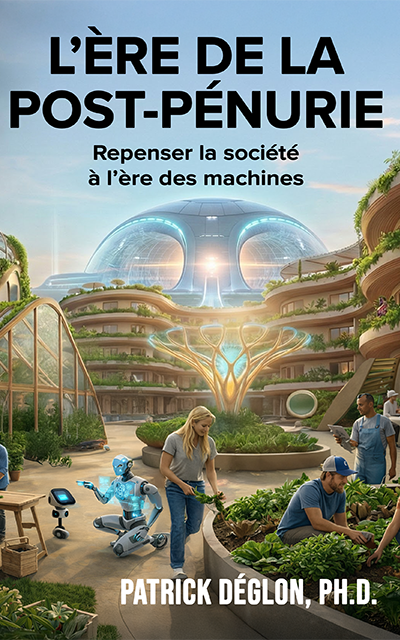
Envie d'aller plus loin ?
Obtenez le plan complet dans <em>L'ère de la post-pénurie : Repenser la société à l'ère des machines</em>