Can a company that needs the public's money ever truly escape the public's control?
Anthropic designed a share class that gives public investors no vote, yet this week those same investors used the only lever left, the price, to force a discount on an IPO meant to cover a compute bill that just doubled to $895 billion. When a frontier AI lab’s mission depends on money it must keep raising from markets, who actually ends up steering it: the founders holding the votes, or the funds holding the checkbook?
Commentaires (1)
In today’s episode of Minds, Bodies, and Terawatts, dated November 7, 2026, the hosts dig into Reuters’ report that Anthropic’s biggest would-be investors want a steeper discount before the roadshow can even start, and into the amended S-1 showing $17 billion in quarterly revenue alongside a return to operating losses. The show’s read is that governance on paper and governance in practice diverge the moment a company must buy compute it hasn’t yet paid for, because the buyers of its stock set the terms whether or not they get a ballot. That tension maps onto the Unscarcity book’s bootstrap paradox: funding a post-scarcity future using the very capital markets whose demands the mission is supposed to transcend. Listen to the full episode and tell us where you think the real control sits.
Related reading on unscarcity.ai:
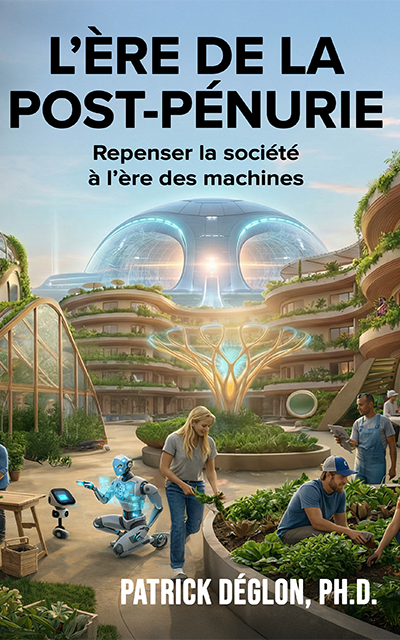
Envie d'aller plus loin ?
Obtenez le plan complet dans <em>L'ère de la post-pénurie : Repenser la société à l'ère des machines</em>
