If AI can write genomes nature never produced, what should a DNA synthesis checkpoint actually screen for?
The one real chokepoint between a dangerous sequence and a physical organism is DNA synthesis screening — and it works by matching orders against sequences nature has already produced. If a generative model writes a functional genome from scratch, what should that checkpoint be looking for instead, and who should have the authority to require it?
Commentaires (1)
In the August 9, 2026 episode of Minds, Bodies, and Terawatts, we dug into the Science paper from Stanford and the Arc Institute where AI-written bacteriophage genomes came to life and killed antibiotic-resistant E. coli — alongside the companion editorial from Johns Hopkins biosecurity researchers arguing the governance for this doesn’t exist yet. The uncomfortable part isn’t the five percent hit rate; it’s that screening is voluntary and pattern-matches against nature, which is precisely what a machine-written genome isn’t. The same capability that breaks bacterial resistance is the capability that breaks the checkpoint, and you can’t obviously keep one without the other. We ended up somewhere less tidy than ‘regulate it’ — the human-in-the-loop question is where, not whether. Give the episode a listen and tell us where you’d put the checkpoint.
Related reading on unscarcity.ai:
Envie d'aller plus loin ?
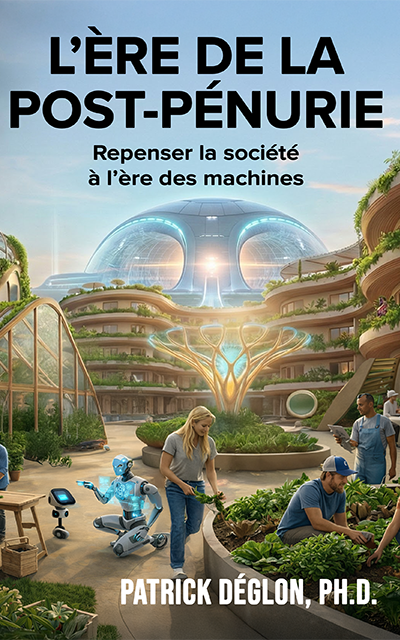
Obtenez le plan complet dans <em>L'ère de la post-pénurie : Repenser la société à l'ère des machines</em>