From CERN to Silicon Valley
Unscarcity
The Blueprint to Rebuild Society for a World Run by Machines
Companion site for Unscarcity by Patrick Déglon, Ph.D. — the manual for crossing the labor cliff with dignity. From Maria in Detroit to Adewale in Lagos, we refuse a future of perfect production and zero customers.
We invent faster than we understand. This is the instruction manual.

Survival guaranteed. Influence earned. Rebuild society for a world run by machines, for humans.
Patrick Déglon, Ph.D.
BLUE FERMION PUBLISHING
Minds, Bodies & Terawatts
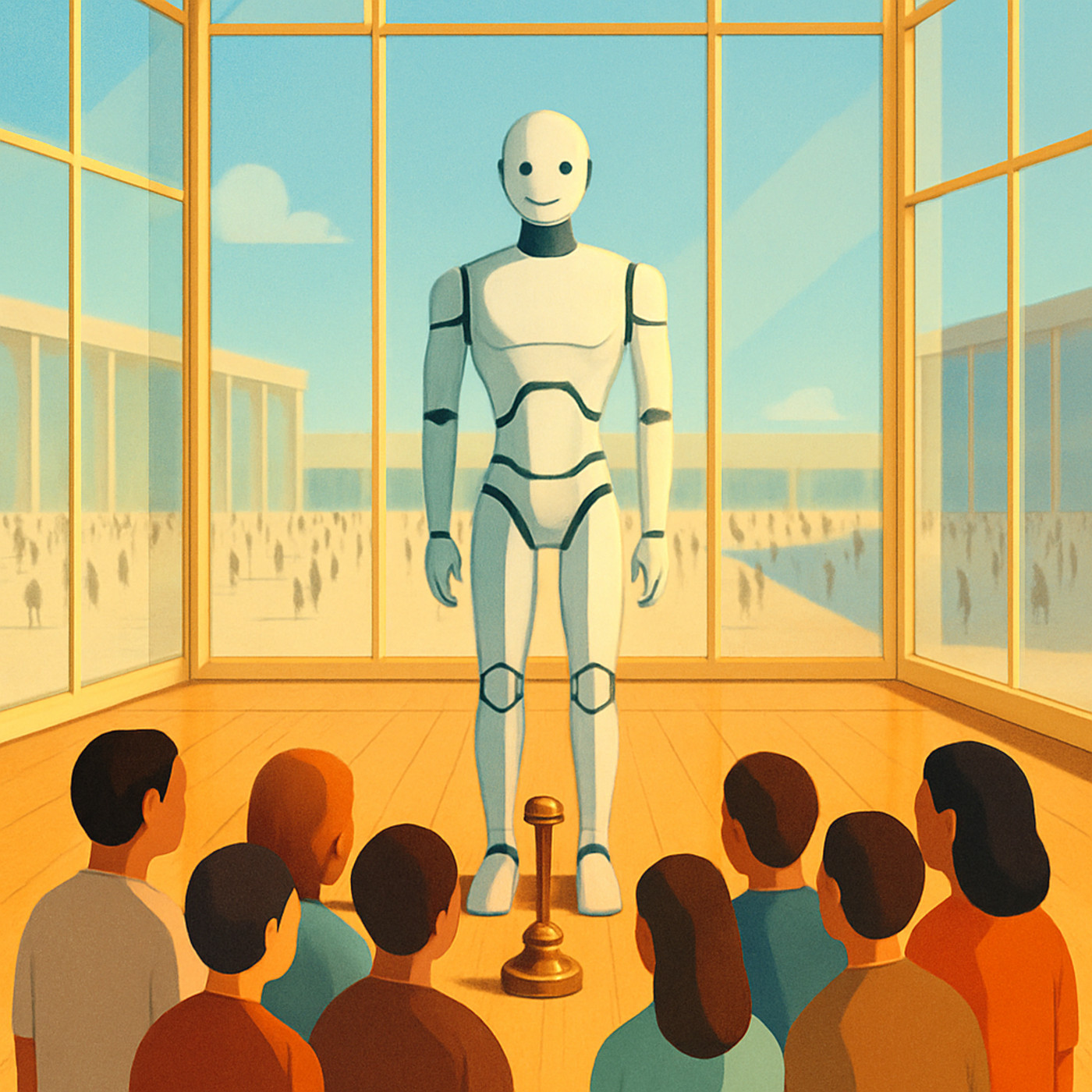
Anthropic Asked the Public for Up to $100 Billion With a 94-Page List of Ways It Could Go Wrong, Including the End of Humanity. Your Share Can't Vote on Any of It, and the Filing Says the Danger Is Why
Anthropic publicly filed its S-1 on Monday for a Nasdaq listing under the ticker ANT. The filing shows $16.3 billion of first-half revenue, an $80.7 billion headline loss that is mostly a paper charge, a $693 million operating loss, about 94 pages of risk factors that include 'catastrophic or existential risks to humanity', and a structure where seven founders hold 50.1% of votes through one Class F share while a four-person trust picks the board majority. The filing says the severity of the risk is one reason the founders keep control, and warns Class A holders may be unable to influence any important decision.
Continue reading on Unscarcity:
More Episodes
View all episodes →
Apollo's Chief Economist Looked at 493 of America's 500 Biggest Companies and Found AI Has Paid Off for None of Them. The Seven Selling It Took the Whole Gain, and Wall Street Spent the Week Dumping the Builders Open episode page
October 26, 2026
In a note published Saturday, October 24, Apollo Global Management chief economist Torsten Slok wrote that AI 'has delivered zero financial payoff to corporate America outside of tech': revenue per...
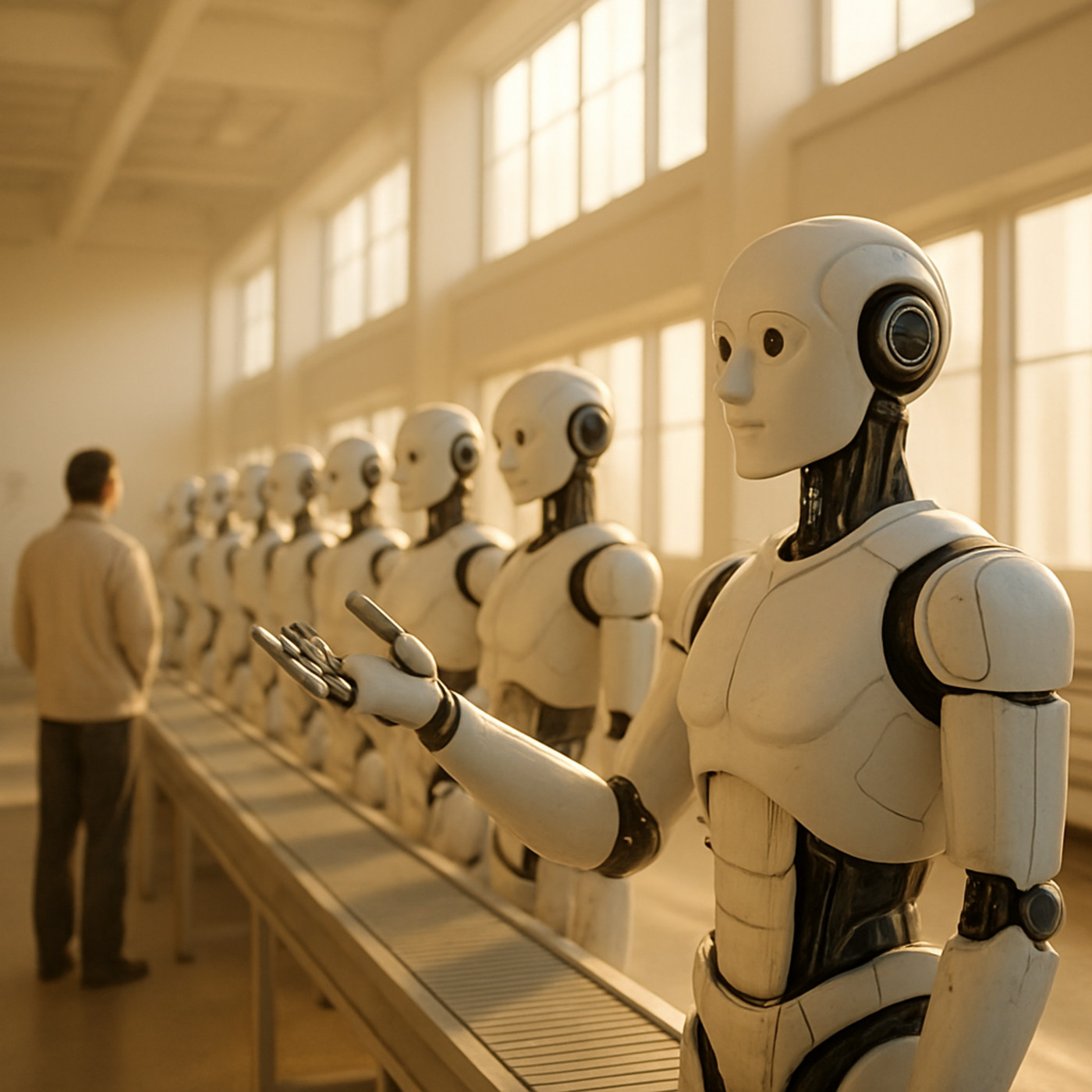
Tesla Put Optimus Into Production on a Line Built for a Million Robots a Year. Musk Says the Hands Aren't Finished, the Brain Isn't Ready, and Customers Wait Until Late 2027 Open episode page
October 25, 2026
On Tesla's Q3 earnings call Wednesday, October 21, Elon Musk said Optimus has entered early production on the Fremont high-volume line where the Model S and X were built, and Tesla's shareholder...
Trump Says Data Centers Are 'Mandated by Me' to Make Their Own Electricity. Two Months Ago He Said Towns That Fight Them Would End Up 'Backwards and Poor', and His Own FERC Just Ruled Only States Can Order It Open episode page
October 24, 2026
In a Truth Social post early Wednesday, October 21, President Trump wrote that new large data centers are 'mandated by me to make their own electricity' and sell any excess to the local grid, and...
Scenes from the transition

Learning without scarcity
Universal tutors free every kid from the factory model of schooling.

Foundation logistics
Food, energy, and care arrive like tap water when the Foundation is infrastructure.

Human connection
The Frontier keeps ambition alive through contribution, not competition for survival.
Why this matters now

The labor cliff ↗
Housekeepers and coders are replaced by $499/month robots and AI agents. Efficiency is exponential; the safety net is not. Unscarcity is the plan to keep people ahead of their own inventions.

The Ford moment, again ↗
Perfect production with zero customers collapses the economy. Ford doubled wages to create his own market; we need the civilizational version — abundance as infrastructure.

Two futures ↗
Path 1: Star Wars — abundance held hostage by a few. Path 2: Unscarcity — symbiotic Commons where AI delivers plenty and humans provide resilience. The choice is architectural, not inevitable.
Nine pivots from Unscarcity
Lifted directly from the book's throughline — from the Foundation to the Next Thousand Years.
1. The Foundation ↗
Essentials as infrastructure: housing, food, energy, healthcare, mobility — no prices, no meters. Survival divorced from employment.
2. The Frontier ↗
Impact replaces income. Contribution earns access to scarce frontiers — life extension, interstellar seats, high-compute projects — decaying so power can't ossify.
3. MOSAIC of Commons ↗
Federated governance inspired by Data Mesh: thousands of Commons with local autonomy, linked by transparent boundary protocols and proof-of-diversity.
4. Residents & Citizens ↗
Spark Threshold grants the right to exist; Civic Service grants the right to govern. Consciousness earns residence, stewardship earns a vote.
5. Education for Citizenship ↗
Guild-style learning replaces factory schooling; purpose-driven missions and apprenticeships prepare citizens for Commons leadership.
6. The Cognitive Field ↗
Consent-based neural commons: shared experiences, simulations, and memory without surrendering agency. A global mind, not a hive mind.
7. The Sacred Question ↗
Where physics meets faith: simulation theory, quantum mechanics, and mystic traditions converge. Finding common ground in the deepest questions.
8. The Transition ↗
A bridge for incumbents: the EXIT Protocol converts capital to contribution-based influence. Avoid the fire; take the exit.
9. The Enterprise EXIT ↗
Corporations become Mission Guilds. Stewardship replaces ownership. What happens to organizations when money dies?
10. Geopolitics of Abundance ↗
Civilizational resilience: transparent AI counsel for states, supply webs instead of supply chains, Commons alliances that out-compete empires.
Where to start in the notes
The /a library mirrors the manuscript. Jump to the companions and research that deepen each pivot.
Start here
Proof points
Join the builders
Unscarcity isn't a prediction — it's a blueprint that survives debate. Bring your critiques, experiments, and pilots to the forum.