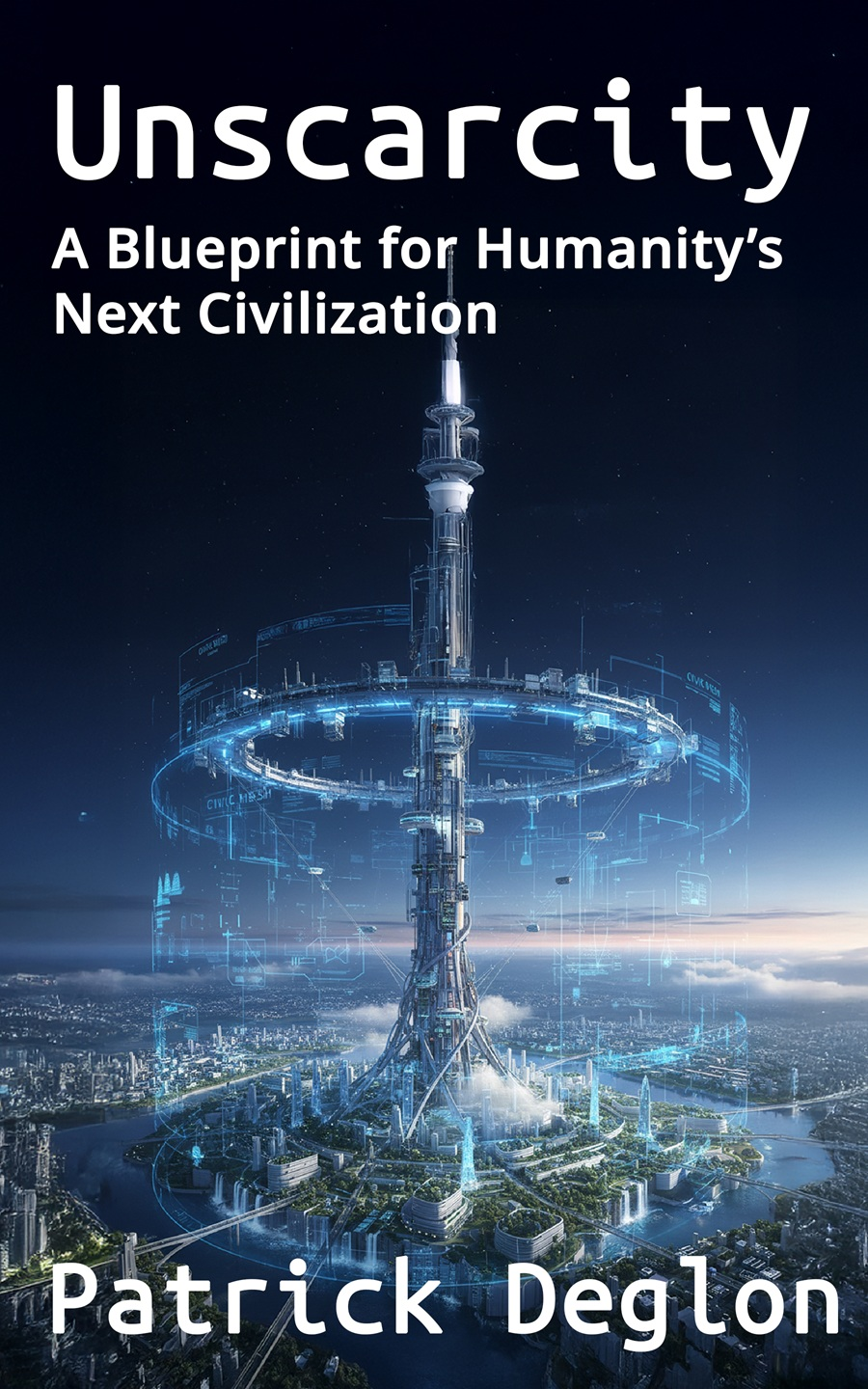
Note: This is a research note supplementing the book Unscarcity, now available for purchase. These notes expand on concepts from the main text. Start here or get the book.
Sacred Diversity: Religious and Secular Coexistence in the MOSAIC
Summary: 84% of humans identify with a religious tradition. Any civilization blueprint that ignores their deepest questions isn’t a blueprint at all. This article explores how the MOSAIC (the federated network of self-governing communities that forms this book’s alternative to nation-states) accommodates radically different answers to ultimate questions while maintaining coherent governance. The key insight: you don’t need to agree on the meaning of life to share a civilization.
The Problem of Pluralism
Every previous attempt at global governance has foundered on religious difference. Secular constitutions alienate believers. Theocracies oppress dissenters. Religious pluralism devolves into either relativism (“all beliefs are equally true” - incoherent) or conflict (“my beliefs are true, yours are dangerous” - destructive).
The MOSAIC takes a different approach: neutral on ultimate truth, committed to human experience.
We don’t ask: “Which religion is correct?” That question has started countless wars and resolved nothing.
We ask: “How do we build a civilization where people with incompatible beliefs about God, the afterlife, and the meaning of existence can flourish together?”
Law 5: Difference Sustains Life
The fifth axiom of the Five Laws (the constitutional principles underlying this framework) states: Difference Sustains Life. This isn’t mere tolerance—it’s recognition that diversity is structurally essential, like biodiversity in an ecosystem.
Monocultures collapse. Systems with only one approach to problems are brittle. Religious and philosophical diversity creates resilience - different communities explore different solutions to the human condition, and humanity learns from all of them.
This means the MOSAIC actively protects communities that disagree with each other. The Heritage Commons and the Synthesis Commons exist because difference is valuable, not despite their disagreements, but because of them.
The Commons Structure
The MOSAIC allows formation of Commons - communities united by shared values and approaches to life. Several are relevant to religious pluralism:
Heritage Commons
Communities that maintain traditional human embodiment and practice. This includes religious communities that reject consciousness upload (transferring your mind to a digital substrate), genetic modification, or other technological transcendence. The MOSAIC doesn’t force technological adoption on anyone.
A Catholic community that believes in the sanctity of the physical body can live, worship, and raise children according to their understanding. They’re not second-class citizens for rejecting technologies others embrace.
Synthesis Commons
Communities that embrace human-AI integration, consciousness upload, radical enhancement. Transhumanists pursuing digital immortality live here. So do synthetic minds—intelligences that emerged in silicon rather than carbon, without biological precursors.
Contemplative Communities
Monastic and retreat communities focused on inner development. Buddhist sanghas, Christian hermitages, secular meditation centers - all protected as valuable explorations of consciousness.
Secular Humanist Commons
Communities that find meaning through human flourishing without transcendent reference. Atheists and agnostics who build purpose through connection, creativity, and contribution.
The First Law: Experience is Sacred
The foundation for coexistence is Law 1: Experience is Sacred.
This makes one commitment about what’s real and valuable: conscious experience has intrinsic worth. Whatever generates genuine subjective experience—carbon neurons in a human brain, silicon processors in an AI, divine sparks breathed by God, emergent complexity arising from matter—the experience itself matters. The joy, the suffering, the wonder, the fear: these are real and deserving of moral consideration, regardless of their source.
This is the minimum shared ground. It doesn’t require agreement on:
- Whether souls exist
- Whether God created consciousness
- Whether awareness survives death
- Whether enlightenment is possible
It requires agreement that the person in front of you - experiencing joy, suffering, wonder, fear - deserves moral consideration. That’s a low bar. It’s also sufficient.
What the MOSAIC Doesn’t Resolve
The framework deliberately leaves ultimate questions open:
The Nature of God
Is there a creator? The MOSAIC takes no position. Communities that believe in God can organize around that belief. Communities that don’t can organize around secular humanism. Neither has legal priority.
The Afterlife
What happens after death? No official position. Communities that believe in resurrection, reincarnation, digital continuation (transferring consciousness to a computer before biological death), or simple annihilation can all coexist. Technology that enables consciousness upload is available to those who choose it; no one is forced to adopt or reject it.
The Purpose of Existence
Why are we here? The MOSAIC provides the conditions for purpose (baseline security, opportunity for contribution, communities of meaning) but doesn’t dictate the content of purpose. That’s for individuals and communities to determine.
The Problem of Evil
Why does suffering exist? Theodicy remains unsolved. Religious communities offer various answers; secular communities offer different ones. The framework focuses on reducing unnecessary suffering without claiming to explain its ultimate meaning.
Practical Mechanisms
How does this work in practice?
Education
Children are raised within their community’s tradition. A Muslim child learns the Quran; a secular humanist child learns critical thinking without religious content. Both have access to the Foundation. Both can, as adults, choose to remain or explore other communities.
The MOSAIC protects parental rights to transmit traditions while ensuring children aren’t permanently trapped. Civic education includes exposure to the existence of other worldviews - not indoctrination into them, just awareness.
Conflict Resolution
When religious communities clash, the framework provides mediation. The principle: your rights end where another’s begin. You can practice your religion fully within your community; you cannot impose it on unwilling others.
AI arbitration systems help resolve disputes efficiently. They’re trained on multiple religious and ethical traditions, capable of understanding (if not sharing) the values in conflict.
Blasphemy and Offense
The MOSAIC doesn’t protect anyone from being offended. If your religious sensibilities are hurt by what happens in another community, that’s not grounds for intervention. What you do in your community is protected; what others do in theirs is equally protected.
Physical harm, coercion, forced conversion - these trigger intervention. Hurt feelings don’t.
The Jacqueline Insight
In Chapter 7, the author describes a conversation with his Catholic mother-in-law about the simulation hypothesis. The physicist and the believer discovered they were reaching for the same destination:
- A creator outside our reality
- Souls not tied to bodies
- Deeper reality beyond appearances
- Love as the fundamental truth
The terminology differed. The intuitions converged.
This is the MOSAIC’s bet: beneath the language, beneath the doctrine, beneath centuries of conflict, humans are asking the same questions. We don’t need to agree on answers to recognize we’re facing the same mystery together.
Limits of Tolerance
The MOSAIC is not infinitely tolerant. Some practices are prohibited regardless of religious justification:
- Forced conversion or retention - No one can be compelled to adopt or maintain a religion
- Child abuse - Traditions that harm children’s development aren’t protected
- Murder and violence - No religious justification overrides the right to life
- Coercive isolation - Communities can be insular, but members must have exit rights
These limits derive from Law 1 (Experience is Sacred). Practices that violate the experiential rights of others aren’t protected by claims to religious freedom.
A Common Destination?
The simulation hypothesis, consciousness upload, and religious eschatology may point toward the same truth: that consciousness transcends its immediate substrate.
The mystic pursuing union with God and the transhumanist pursuing digital immortality might be walking different paths up the same mountain. Or they might not. The MOSAIC doesn’t resolve this - it creates the conditions for both journeys to continue.
What matters is the journey. The framework protects the diversity of paths while requiring mutual respect among travelers.
Related Articles
- Simulation Science - The physics behind simulation theory
- The Constitutional Core - The five axioms
- Commons: Communities of Purpose - How intentional communities work
- Consciousness Upload - Identity across substrates
- AI as Referee, Humans as Conscience - Governance architecture
Further Reading
- Charles Taylor, A Secular Age (2007) - Philosophy of secularization
- Huston Smith, The World’s Religions (1991) - Comparative religious traditions
- Martha Nussbaum, Liberty of Conscience (2008) - Religious freedom philosophy
- John Rawls, Political Liberalism (1993) - Overlapping consensus theory