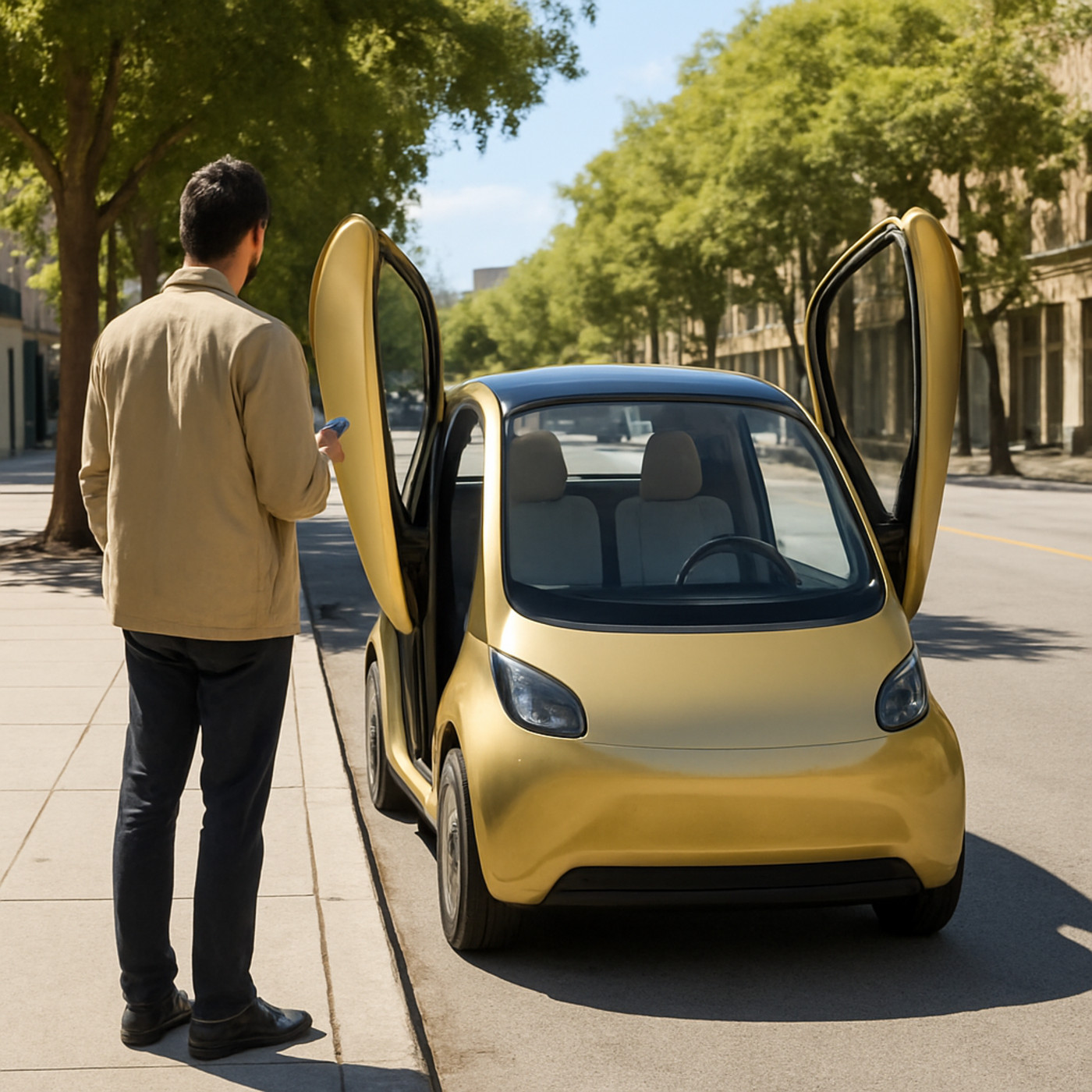
Tesla fait monter des clients payants dans une voiture sans volant, sans pédales et sans personne pour reprendre la main
About This Episode
Tesla a commencé le 3 septembre à proposer des courses dans son Cybercab à deux places dans certains quartiers d'Austin, premier service de robotaxi américain à bord d'un véhicule construit sans aucune commande humaine. Seuls 45 Cybercabs sont immatriculés au Texas, les règles fédérales plafonnent le nombre de voitures sans volant qu'un constructeur peut vendre, sept Américains sur dix se disent mal à l'aise dans une voiture sans conducteur, et les nouvelles conditions de Tesla interdisent les enfants de moins de 13 ans et renvoient tout litige à l'arbitrage.
Our Take
Two months after Tesla promised to take the last human out of its robotaxis, it did, and the episode asks what it put in his place: a remote operator for stalls, an arbitration clause for everything else, and a regulator that says it is evaluating.
Pour aller plus loin sur Unscarcity
The Liability Gap: What a License Really Sells
A human driver came bundled with someone answerable when things go wrong; with the wheel gone, what Tesla put in that place is an arbitration clause and a promo line, which is exactly the gap between reliable-as-accurate and reliable-as-insured.
Autonomy Theater: The Humans Behind 'Autonomous' Robots
Autonomy is a dimmer, not a switch: the Cybercab's human fallback did not vanish, it moved to a remote desk that can nudge a stalled car at walking speed, which is the middle band of the dimmer sold as the top.