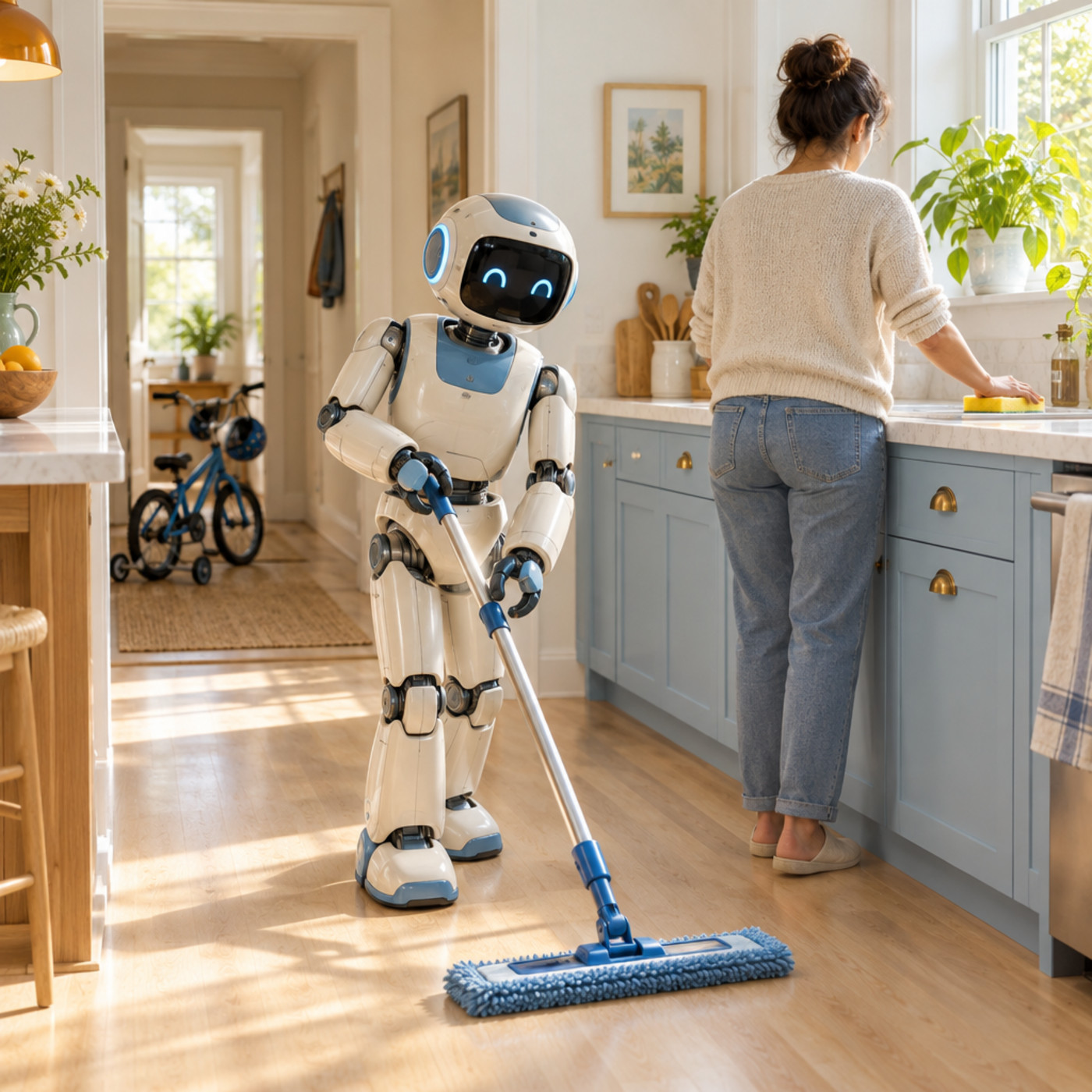
A Reporter Paid $30 for a Humanoid to Clean Her Apartment. A Person in Another Room Was Driving It, the Price Is Low Because You're the Training Data, and Amazon Is Hiring for a Home Robot
About This Episode
MIT Technology Review's Grace Huckins booked Tau Robotics' humanoid cleaning service in San Francisco without telling the company she was a journalist. The 4.5-foot robots are driven remotely by humans; only vacuuming and mopping run unassisted, and the cofounder says the data from each cleaning trains more autonomous models, which is why the price is low. Two days later CNBC reported Amazon has formed a home robot team, bought humanoid maker Fauna Robotics in March, and is hiring for a 'new-to-world' home robot after Astro reached only a few thousand customers.
Our Take
The first home humanoid you can actually book is cheap because a human is still driving it and your apartment is the training set; the episode asks when the person leaves the loop, and what that does to the 861,000 Americans who clean houses for a living.
Continue Reading on Unscarcity
Autonomy Theater: The Humans Behind 'Autonomous' Robots
The Tau robot is a remote human driving a machine while the machine learns; the article's dimmer-not-switch model and its distinction between demonstrated and durable automation is exactly the frame for a $30 cleaning that stalls when the operator's gear overheats.
The Substitution Threshold: When You Stop Being the Cheapest Option
The threshold is crossed when the cheapest reliable provider is no longer human; a $30-an-hour robot against a $17 median cleaner wage is cheaper for the customer but not yet reliable, and the article's own example household is a Detroit house cleaner.