Can Humanoid Robots Replace All Human Professions?
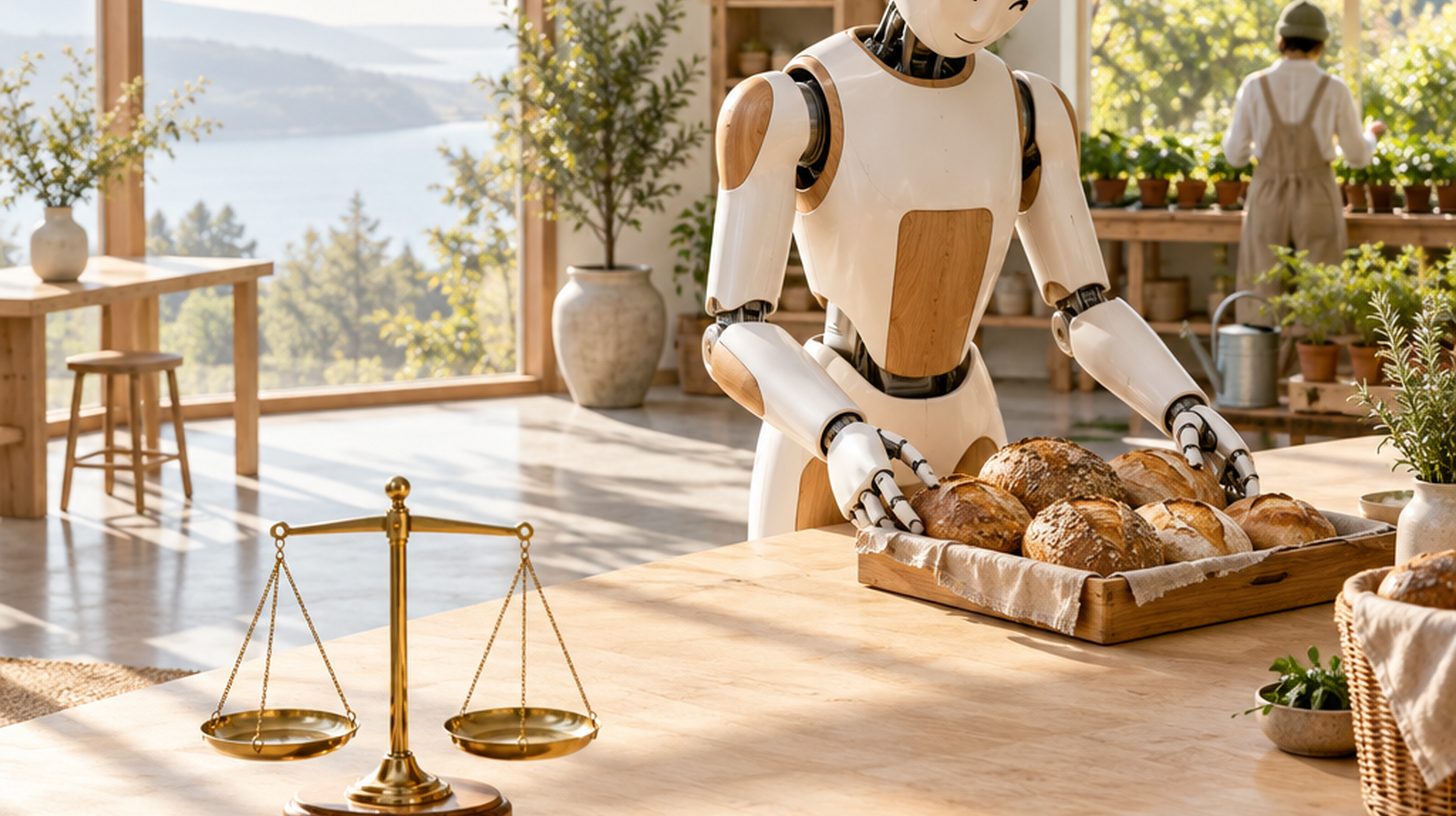
Every humanoid demo video draws the same question in the comments. A composite of the versions we keep seeing:
“Fine, the robot can fold a towel on camera. But every job? Surgeons, plumbers, kindergarten teachers, judges? Or is there some list of professions machines will never touch, and should I be trying to get onto it?”
There are really three questions packed into that one. Can a robot do the work? Will an employer actually swap the person out? And should it, even when it can? They get different answers, on different timelines, and most arguments about robots and jobs go wrong by treating them as one question.
Can They? Not Yet, and Not Evenly
Start with what humanoids do today, on real floors, for real pay. In August 2026 the New York Times went inside BMW’s plant in Spartanburg, South Carolina, and Hyundai’s in Ellabell, Georgia. At BMW, a Figure robot steps off its charger, picks a part from a green plastic bin, loads it onto a trolley and pulls the trolley across the floor. Real parts, real cars, no demo stage. Reporter Jack Ewing wrote that its movements suggested “a worker with a bad hangover rather than a technological revolution.” BMW’s logistics vice president, Ulrich Wieland, said on the record that the robots are still slower than humans, then added that they are advancing fast.
Tesla’s numbers tell the same story from the supply side. Fremont was building several hundred Optimus units a week by September, but most stayed in-house for testing and data collection, the ones on factory floors worked supervised areas on pre-programmed tasks, and a robot needed several days to learn a basic task. Every hand and forearm, with more than 100 screws and small parts, was still assembled by people. On the October 21 earnings call, Musk said the hands aren’t finished and outside customers should expect deliveries toward the end of 2027.
So the honest answer to “can they” is: some tasks, in structured places, slowly, with supervision. That’s a long way from “all professions.” It is also a long way from zero, and the gap is closing on a curve, not a calendar.
From the Podcast: Slower Than the Man With the Hand Truck
The August 12, 2026 episode of Minds, Bodies & Terawatts, our daily podcast, built its whole show around that Times piece. Its headline: The Robots Arrived at an American Car Plant, and the Line Supervisor Says They’re Still Slower Than the People.
The episode’s question was the obvious one: if the person next to the robot is quicker, why keep the robot? The Times answered in a single line. These machines would never take a lunch break, join a union, or require health insurance. As the host put it, that isn’t a productivity argument. It’s a payroll argument.
And BMW is past the trial stage. Figure’s earlier model spent eleven months in the Spartanburg body shop and helped build more than thirty thousand X3s before the newer one moved into parts sequencing in June. Hyundai plans to bring Boston Dynamics Atlas robots into its Georgia operations starting in 2028, building toward capacity for thirty thousand robots a year.
The episode’s sharpest point was about what a slow shift buys. Language models had the whole internet to read, but nobody ever wrote down the wrist angle for pulling a loaded trolley through a busy aisle. The only way to get that data is to have the machine do the job badly, next to someone doing it well. In the guest’s words: “It’s a dimmer, not a switch.” For a parts sequencer, the honest read isn’t that a robot beat you this week. It’s that your week became somebody’s training set.
Will They? The Spreadsheet Decides
Capability alone doesn’t move jobs. Unscarcity names the line that does: the Substitution Threshold, “the moment when the cheapest reliable provider of a given service is no longer human.” Note the words. Not smartest. Not conscious. Cheapest and reliable.
The vendors price against that line openly. The prospectus for the merger taking Agility Robotics public says its warehouse humanoid rents “at a discount to a customer’s fully burdened labor cost,” about $8,500 a month, for a machine whose build cost is falling from $150,000 toward $30,000. The robot doesn’t have to be cheap. It has to be a little cheaper than you.
The threshold also crosses one task at a time, and it can stall partway. Klarna’s AI assistant took over the work of about 700 customer-service agents in its first month in 2024. In May 2025, after complaints about generic answers on complicated cases, Klarna started hiring people again. By that November it put the assistant at the work of 853 agents. The routine tier crossed and kept crossing. The cases that needed someone to read between the lines stayed human, for now.
“Reliable” also cuts the other way. The Wall Street Journal reported that electricity at one of Walmart’s automated grocery facilities can cost as much as $800,000 a month, against about $250,000 when people did the work. A machine that stalls on an oversized box hasn’t crossed anything, whatever the demo showed.
Should They? When Accuracy Isn’t the Product
Some work has a ceiling that has nothing to do with skill. In licensed professions, “reliable” carries a second meaning: someone specific absorbs the loss when the answer is wrong. That’s what a malpractice premium buys, and it’s why, as the site’s research puts it, a chatbot can already out-read your doctor and still not replace them.
Bill Gates pushed this idea as far as he could in August 2026 with a proposal he calls Human Reserved, a set of jobs society deliberately leaves to people. “Imagine a robot giving you the awful news that you have an incurable disease,” he wrote. “There’s no technical reason why it couldn’t. Yet it shouldn’t.” Pressed by Axios on how far the fence could stretch, he said that even in its most extreme form it would cover roughly 40 percent of jobs: “that’s as high as I can get.”
Read that ceiling carefully. A technologist who has spent decades betting on capability curves, designing his own best case, could shelter two jobs in five. And the jobs we already treat as irreplaceably human are paid as if they weren’t: home health and personal care aides earn a median of about $17.21 an hour, childcare workers about $16.82.
The Better Question
So: will humanoid robots replace every profession? Probably not, and not soon. Some work will stay human because the person is the point. But “not all” is a poor comfort when the threshold keeps crossing, one task at a time, across most of what pays the rent. The question worth asking is what happens to the people on the far side of the line, and that’s the problem the rest of the framework is built to solve: survival decoupled from employment, and meaning decoupled from a paycheck.
On unscarcity.ai: Three Articles Behind This Answer
The Substitution Threshold is the full treatment of the cheapest-reliable line, including why licensed work crosses late and mechanically checkable work crosses early. Humanoid Robots 2026 is the running record of what the machines can actually do, shipment by shipment. Human Reserved takes Gates’s 40 percent fence apart and asks what happens to the other 60.
In the Book: The Henderson Kitchen
Unscarcity opens its Preamble, “The Paradox,” in a Detroit kitchen. Maria Delgado has cleaned the Hendersons’ house for years. She knows the sticky spot by the garbage disposal and the hairline crack in the marble. Then Mrs. Henderson, holding a severance check, tells her the robot handles it now. “It’s just more convenient, Maria. Nothing personal.”
The section that follows, “The Substitution Threshold, at Scale,” is where the book names the line, and it refuses to treat Maria’s kitchen as a one-off: “The Henderson kitchen isn’t an outlier; it’s a leading indicator.” Then it asks the question the “which jobs are safe” debate tends to skip: “When a third of the work that pays people vanishes, who buys the products?” The book follows that question past Rosa’s corner grocery, which used to close at nine and now closes at six.
More questions like this one are collected on the blog page. Follow the series on Substack.