Plain answers to the questions people ask most about AI, robots, energy and what comes after scarcity.

How AI, Robots and Energy Abundance Fit Together
AI is the mind, humanoid robots the body, fusion the fuel. Follow one $300,000 invoice to see why the three only produce abundance together.

What Is a Post-Scarcity Society? Will We Get There?
Post-scarcity means survival becomes infrastructure, not that everything is free. The realistic dates, and the robot that outran Usain Bolt.

Will I Need to Work If Robots Do Everything?
The honest answer has two halves: you won’t need a job to survive, but you’ll still have to contribute to matter. Here is the difference.

How Soon Will AI and Robots Do Most Human Work? The Numbers
AI was cited in 120,136 US job cuts through September 2026 while unemployment sat at 4.2%. A dated timeline for the end of most work, from real data.

What Happens to Money in a Post-Scarcity World?
Money doesn’t vanish overnight. First it funds its own replacement, then it changes what it promises, then it splits in two. The precise answer.

How Would a Moneyless Economy Actually Work?
Two layers: essentials with no currency at all, like the Inca storehouses, and a status ledger you can’t spend, like a Maya king’s jade. The mechanics.

What Would Education Look Like in a Post-Scarcity Society?
If AI can tutor and robots can work, what is school for? The factory model is dying. Here are the three adults the Unscarcity book puts around every child.

How to Prepare for the Post-Scarcity Transition Today
AI was blamed for 120,136 US job cuts in nine months. What to do before 2030: four local moves, career and money steps, and the 408-million-hour math.

How Will AI and Humanoid Robots Change My Daily Life?
The agent arrives before the robot, the robot arrives with a person inside it, and the bills change last. Daily life with AI, chore by chore.

Can Fusion Energy Really Solve Our Power Problems Forever?
The fuel lasts billions of years. The reactors don’t exist yet, and the ownership question is wide open. What ‘forever’ really depends on.

How Do Humanoid Robots Actually Help Humans?
Forget the backflips. Humanoids already lift and carry on job sites; at home they still need a remote human. Where the help is real, and who gets it.

Is Post-Scarcity Actually Possible or Just Science Fiction?
The physics is settled. The engineering is late and admits it. The real gamble is who owns the machines. A post-scarcity reality check, with dates.

What Will People Do With Their Time When AI Handles Work?
Not nothing, and not all the same thing. What cash pilots, a 1968 mouse colony and Frankl’s “Sunday neurosis” say about life after the job.

How Do You Solve Resource Scarcity With Limited Space on Earth?
Fusion and robots don’t make the planet bigger. Water, food and most materials turn out to be energy problems. Location doesn’t. Here’s the plan for both.

Can AI Create Abundance Without Creating Inequality?
Falling costs don’t share themselves. Where AI’s gains leak to the top, and the three design choices that keep abundance from turning into feudalism.

What’s the Difference Between AI and Humanoid Robots?
AI is a mind with no hands. A humanoid robot is a body that needs a mind. Why they move at different speeds, and why it matters for your job.

Why Do We Need Humanoid Robots Instead of Just AI?
AI can draw the plans for a house but can’t pour the concrete. Why abundance needs a body, why it’s shaped like ours, and why it’s the harder half.

What Are the Biggest Obstacles to Reaching Post-Scarcity?
The robots and reactors are the easier part. The hard ones: a bill that arrives before the payoff, who owns the machines, and rival nations.

How Does Fusion Energy Enable Post-Scarcity Living?
Your power bill is a small slice of your budget. Once robots do the work, electricity is underneath almost every other line. Why fusion is the enabler.

Will Everyone Have Access to Post-Scarcity Benefits or Just the Wealthy?
Left alone, abundance goes to whoever owns the machines. Unscarcity’s fix: take survival off the price list, where no share, fund or bunker can buy it.

What Jobs Will Humans Do in a Post-Scarcity Society?
During the transition: care, building and the jobs behind a credential. After it: roles you hold, not jobs you need to survive. The precise answer.
Can Replicator Technology Actually Exist?
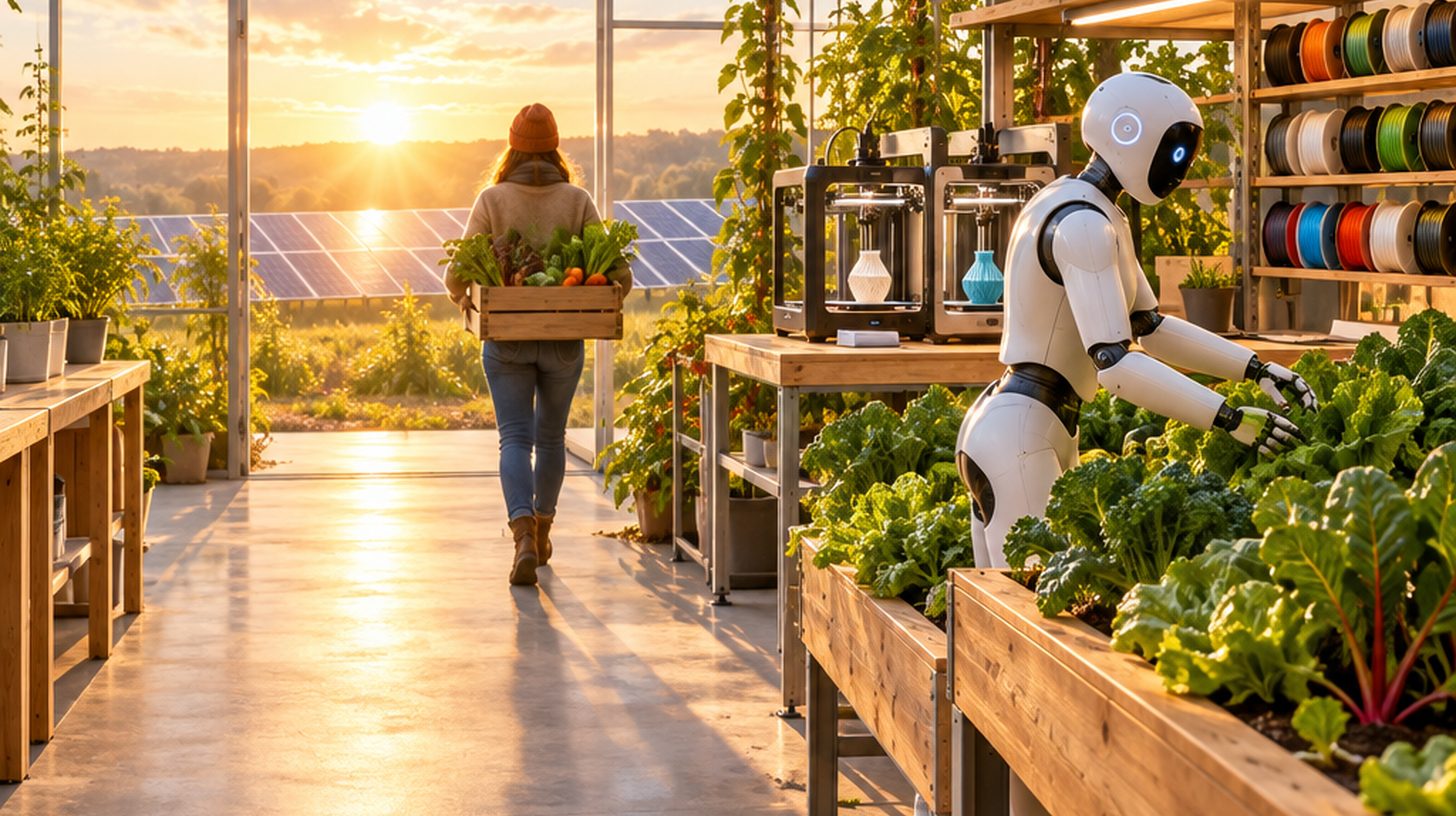
Nobody needs a box that assembles atoms on command. Make energy, labor and materials cheap and you get the same result. Most of the pieces exist.

What Does Living in Post-Scarcity Actually Look Like Day-to-Day?
No alarm, no rent, a bike that shows up when you ask. Then the hard part: a whole free day and nobody telling you what to do with it.

How Would Healthcare Work in a Post-Scarcity Society?
No bills and no insurance cards, but surgeons and new treatments stay scarce. Who gets care first when money can’t decide? The Unscarcity answer.

What Happens to Competition When Everything Is Abundant?
Competition doesn’t die when robots make everything. It moves to what stays scarce, trades bankruptcy for irrelevance, and gets a new scoreboard.

Could AI Create a Post-Scarcity World in My Lifetime?
You will likely live through the start of post-scarcity. Whether you live inside it depends on three clocks, one crisis window and your own birth year.
How Do Humanoid Robots Learn and Improve Over Time?
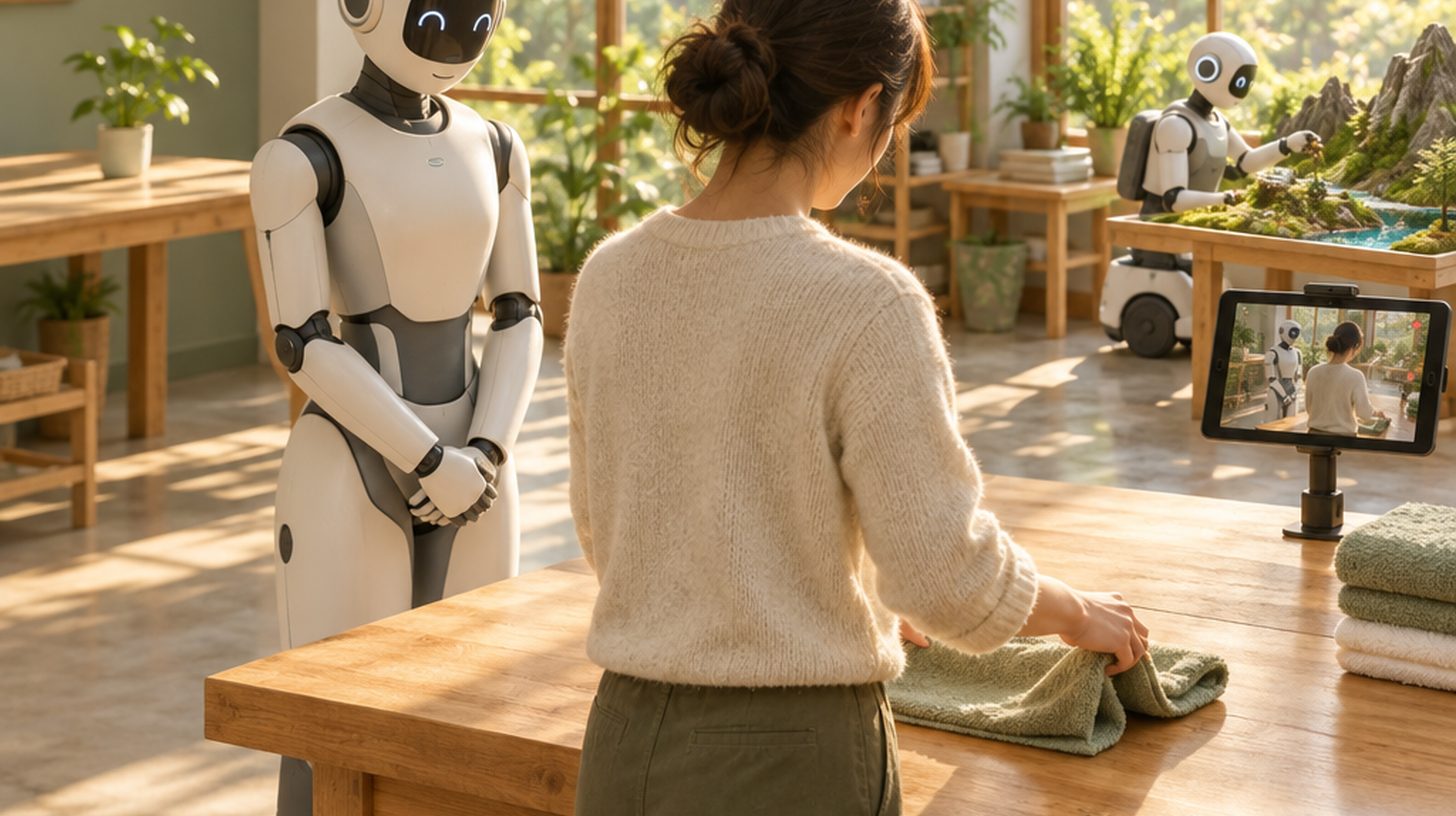
Robots learn in simulators, from remote operators, from people filmed at work, and from each other. Who does the teaching matters as much as how.

What Would Post-Scarcity Mean for Housing and Land?
Robots can print the walls. They can’t print a second riverfront. How post-scarcity builds homes, treats land, and decides who gets the view.

Can AI Solve the Problem of Scarcity Completely?
No, and a plan that says yes is the one to worry about. Three limits AI can’t engineer away, and what a realistic abundance looks like instead.

How Does Automation Lead to Economic Freedom?
Automation can end the need to sell your hours to eat. But the chain from cheap robots to free people has four links, and two of them are under strain.

What Role Does AI Play in Creating Abundance?
AI can’t grow wheat or pour concrete. Its role in abundance is to make expert thinking cheap, run the other engines, and referee without ruling.

How Will Governments Change in a Post-Scarcity World?
Government doesn’t wither away, and AI doesn’t take the throne. Its job narrows, machines take the whistle, and power gets an expiry date.

Would Post-Scarcity Eliminate Poverty and Homelessness?
We already have the food and the empty homes. Poverty survives because survival runs through a paycheck. What post-scarcity changes, and what it can’t.

What Skills Will Matter Most When Robots Handle Labor?
Learn to code, learn a trade, learn empathy: the advice keeps expiring. A sharper test for which human skills hold their value once machines do the work.

How Reliable Is Fusion Energy for Powering Post-Scarcity?
Fusion’s fuel will outlast us. The real tests are the parts lining the reactor, the wires leaving it, and what keeps the lights on if it runs late.

Can We Transition to Post-Scarcity Without Social Collapse?
Collapse is not bad luck. It follows from no slack, no buy-in and no way to say no. What a peaceful crossing to post-scarcity actually requires.

What Would Family and Relationships Look Like in Post-Scarcity?
When rent, healthcare and care stop depending on a paycheck, families lose their economic glue. What’s left is chosen. How Unscarcity sees it.

How Do You Prevent Resource Hoarding in Post-Scarcity?
Hoarding comes in three kinds. Abundance defeats the first, decay blocks the second, and the third is already happening inside today’s AI data centers.

Will Post-Scarcity Happen Equally Across the World?
No. The brain layer spreads by download, the body and the fuel get borders, and the rules get written by whoever is in the room. What that means.

How Do We Measure Progress Toward Post-Scarcity Today?
GDP won’t tell you. Watch three price curves, one line being crossed job by job, and a floor nobody has built yet. A working dashboard.

Can Humanoid Robots Replace All Human Professions?
A robot doesn’t have to beat you at your job. It has to be the cheapest reliable option. Where that line has crossed, where it hasn’t, where it shouldn’t.

The psychology of living without economic pressure
Remove money stress and people sleep better, worry less, see friends more. Then the gains fade. What the evidence says about life without the wolf.

How Post-Scarcity Affects Mental Health and Wellbeing
Abundance ends one kind of suffering almost completely and leaves another untouched. The evidence on both, and what has to be built for the second.

Post-Scarcity and Environmental Restoration
Abundance burns more power before it heals anything. What changes when labor stops being the limit on cleanup, and who gets credit for a restored river.

Creative Pursuits and Hobbies in Abundance
If machines can make the art, why would anyone pick up a brush? What abundance does to hobbies: the hours come back, the score becomes optional.

Space Exploration as a Post-Scarcity Society Priority
Should a world without want spend its surplus on Mars? Space stays scarce after bread doesn’t, which makes it a real priority and a real risk.

Post-Scarcity Travel and Lifestyle Freedom
If you don’t need a job, can you live anywhere? Mostly yes: the floor moves with you. The beach doesn’t get bigger. What changes, and what stays scarce.

How AI Learns to Serve Human Needs Better
AI learns from signals like your thumbs-up, and a signal is not a need. Why chatbots flatter, and what it takes for “better” to mean better.

The Cost of Building Humanoid Robot Infrastructure
The $20,000 robot is the cheap part. The factory, the supply chain and the training bill cost far more, and who pays them decides who keeps the savings.

Post-Scarcity and Universal Basic Resources
A basic income gives you money for the essentials. Universal basic resources give you the essentials. That difference decides who owns abundance.

Post-Scarcity and Human Meaning: What Is Our Purpose When Survival Is Solved?
If machines out-work, out-think and out-prove us, what are we for? Scarcity gave us a default answer. It was never a good one, and it is about to expire.

Food Production in Post-Scarcity Systems
We already grow enough food. Vertical farms are less ready than the hype says. And a cheap food system can still starve you. How abundance feeds people.

Manufacturing Customization at Scale
Will abundance mean one standard-issue sofa for everyone? Custom costs extra today because of setup, not material. What robots change, and what they don’t.

Post-Scarcity and Crime Elimination
Free food and housing remove the crimes of desperation. They leave greed for status, rage and fraud. Here is what changes, and what the design does next.

How Post-Scarcity Affects Personal Relationships
When nobody needs anyone to survive, what holds friendship and love together? Need leaves, want stays, and a flattering machine waits in between.