Post-Scarcity and Universal Basic Resources
Whenever a thread turns to AI and jobs, someone proposes a check, and someone else replies that a check is the wrong unit. A composite of the question we keep seeing:
“Everyone says UBI is the answer when robots take the jobs. But I keep seeing people argue for ‘universal basic resources’ instead: just give everyone housing, food and power directly. Isn’t that the same thing with extra steps? Or worse, ration cards? And who gets to decide what counts as basic?”
It isn’t the same thing, and the difference has nothing to do with generosity. A basic income gives you a claim on goods that someone else still owns and prices. Universal basic resources give you the goods. Once production costs start falling, those two arrangements pull in opposite directions. And “who decides what counts as basic” has a real answer, with two lines drawn through it.
A Check Is a Claim. A Resource Is the Thing.
Start with the numbers Unscarcity’s research leans on. The world produces enough food to give every person about 2,800 calories a day, yet the UN counted 645 million people who went hungry in 2025. The United States has roughly 16 million vacant homes, and HUD’s January 2025 count found 745,652 people homeless on a single night. The shortage is in access. The supply is there.
A basic income tries to fix access by topping up purchasing power and letting the market do the rest. That works while sellers have inventory, prices still mean something and landlords want dollars. It also means every essential keeps passing through a checkout counter owned by somebody else, and whatever is scarce in that market, housing above all, can soak up the extra money.
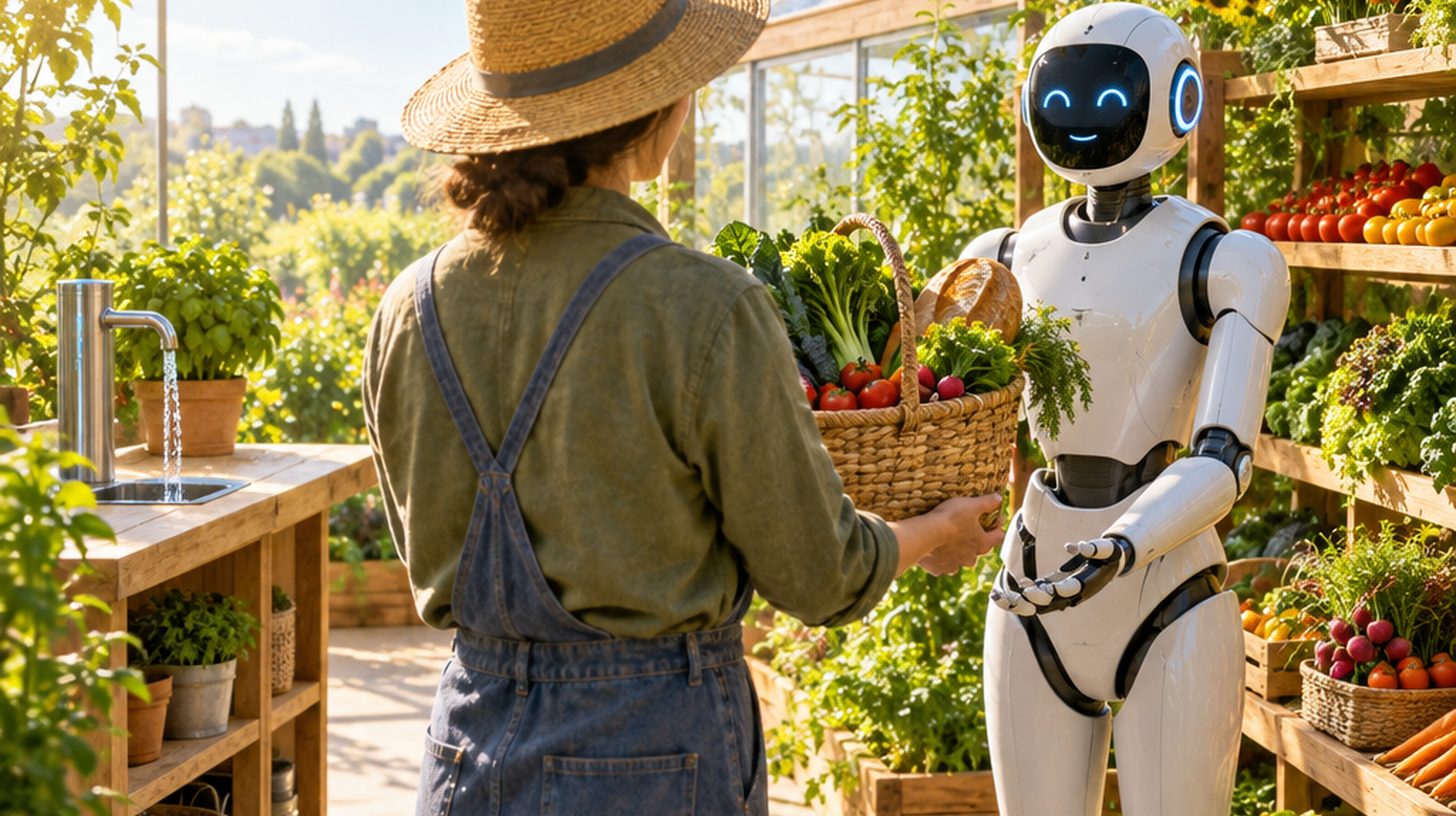
Universal basic resources skip the counter. The book calls its version the Foundation: housing, food, healthcare, energy, education, transport and digital access, provided the way roads and tap water already are. The Foundation article puts the distinction bluntly. Welfare implies exception, so it needs case workers, applications, appeals and fraud detection. Infrastructure implies universality: “When you flip a light switch, you don’t apply for electricity.” The article goes further and argues that it is cheaper to give everyone housing than to run the machinery that decides who deserves it.
That also answers the ration-card worry. A ration card is scarcity administered by a clerk. The Foundation runs on the opposite premise: robot-built housing, vertical farms and fusion power push the cost of essentials toward zero, and the routing problem is the kind logistics software already handles. Amazon shipped 17.3 million packages a day in 2024 without a planning committee. In the article’s words: “You order; it arrives.”
Three Ways to Hand Out the Future
The people building AI have noticed the jobs problem, and their proposals show three versions of one instinct.
The first is cash, scaled up. In April 2026 Elon Musk posted that “Universal HIGH INCOME via checks issued by the Federal government is the best way to deal with unemployment caused by AI.” The money would be newly created, and prices would hold, he argued, because robots would produce goods “far in excess” of it.
The second is ownership. In May 2026 Sam Altman told The Atlantic, “I no longer believe in universal basic income as much as I once did,” and said he was more interested in “collective ownership that could be in compute or in equities or something else.” In 2024 he had floated Universal Basic Compute: “everybody gets like a slice of GPT-7’s compute,” to use, resell or donate.
The third is the one this post is about: provide the essentials themselves, unmetered.
Compute shows how the second and third relate. In the Foundation, compute isn’t a separate allowance. It sits on the energy and digital-access lines next to heating and connectivity, and the Universal Basic Compute article treats personal compute quotas as a bridge for the transition, one whose need “diminishes” once survival is guaranteed regardless.
From the Podcast: A Seat Defending the Toll Booth
The July 4, 2026 episode of Minds, Bodies & Terawatts, our daily podcast, took the ownership version apart. Its headline: OpenAI Pitches Giving the US Government a 5% Stake and an Alaska-Style National AI Dividend Fund.
CNBC had reported that OpenAI floated giving Washington 5 percent of the company, about $43 billion at its March valuation, and that Altman pitched every leading US lab paying the same share into a fund modeled on Alaska’s Permanent Fund, which mails residents a yearly check from oil money. The Financial Times called the talks conceptual, and any version would need an act of Congress. In June, Bernie Sanders had introduced a bill to take half of the major AI labs for a public fund.
The episode’s objection is structural. A dividend is a claim on profit, and “a dividend is only worth something if the product stays expensive enough to throw one off.” Wire one into every household and you get “two hundred million people quietly rooting against the price falling.” The public thinks it owns the future and has “bought a seat defending the toll booth.” It doesn’t buy control either: “You get a check, they keep the keys.” The closing line names the fork: “a dividend from the owners, or the price switched off for everyone.”
Who Decides What’s Basic?
Two lines get drawn: one around the goods, one around the people.
The goods line is the 90/10 split. The Foundation covers what a dignified life needs, and the Foundation article lists what stays off the list: luxury yachts, private islands, tickets to Mars. Those belong to the Frontier, the scarce layer, allocated by Impact, a record of contribution that can’t be bought. Even inside the Foundation, energy is “unlimited within reason,” not infinite.
The people line is harder, and the book takes it on directly. If basic resources are universal, universal across whom? Not citizens, taxpayers or workers. Anyone who is conscious. “You don’t apply for Foundation access. You don’t prove need.” You meet the Spark Threshold, and you’re in.
On unscarcity.ai: The Three Articles Behind This Answer
The Foundation makes the case for direct provision over cash: the vacant-homes math, the technology behind each line item, and why welfare and infrastructure are different design choices. Universal Basic Compute covers the compute-not-cash proposal, the public compute programs under way from Canada to India, and the open question of who sets each person’s allocation. Elon Musk’s Universal High Income follows the biggest check anyone has promised and the architecture it leaves out.
In the Book: Generous at the Door
Chapter 4 of Unscarcity, “Residents and Citizens: Who Gets to Belong?”, is where the universality of basic resources gets tested. The section “Three Roads, Two Disasters” weighs three ways to decide who has rights. The Blood Test grants them to human DNA only, the same error, the book says, that once justified slavery. The extended Turing Test grants them to anything that acts conscious, and fails because a billionaire with enough data centers “could spin up millions of ‘conscious’ voters overnight and seize a democracy.”
The third road separates the right to exist from the right to govern. A Resident “exists in the system, accesses the Foundation, is protected from deletion, on the strength of consciousness or its reasonable possibility.” A Citizen’s vote is earned through roughly four years of Civic Service. The chapter’s formula: “consciousness grants Residence, service grants Citizenship. Generous at the door, demanding at the table.”
“The Assessment: Echo’s Story” shows the door in use. In Singapore in 2046, a panel of a philosopher, a neuroscientist, a poet and two AI Citizens assesses Echo, a new AI that has asked for Resident status. The neuroscientist stays skeptical, and the panel applies the cost-of-error principle: “when in doubt, include. Better generous to a toaster than murderous to a mind.” Admitting a system that turns out not to be conscious costs “some guaranteed processing power and energy in a world of abundance.” Turning away one that is would be an atrocity.
The arithmetic leans on that last phrase. In a scarce economy, every wrongly admitted Resident is a cost someone else pays. The book also follows the crypto billionaire who tries to exploit the open door with 10,000 AI instances, and the fingerprint that gives his copies away.
More questions like this one are collected on the blog page. Follow the series on Substack.